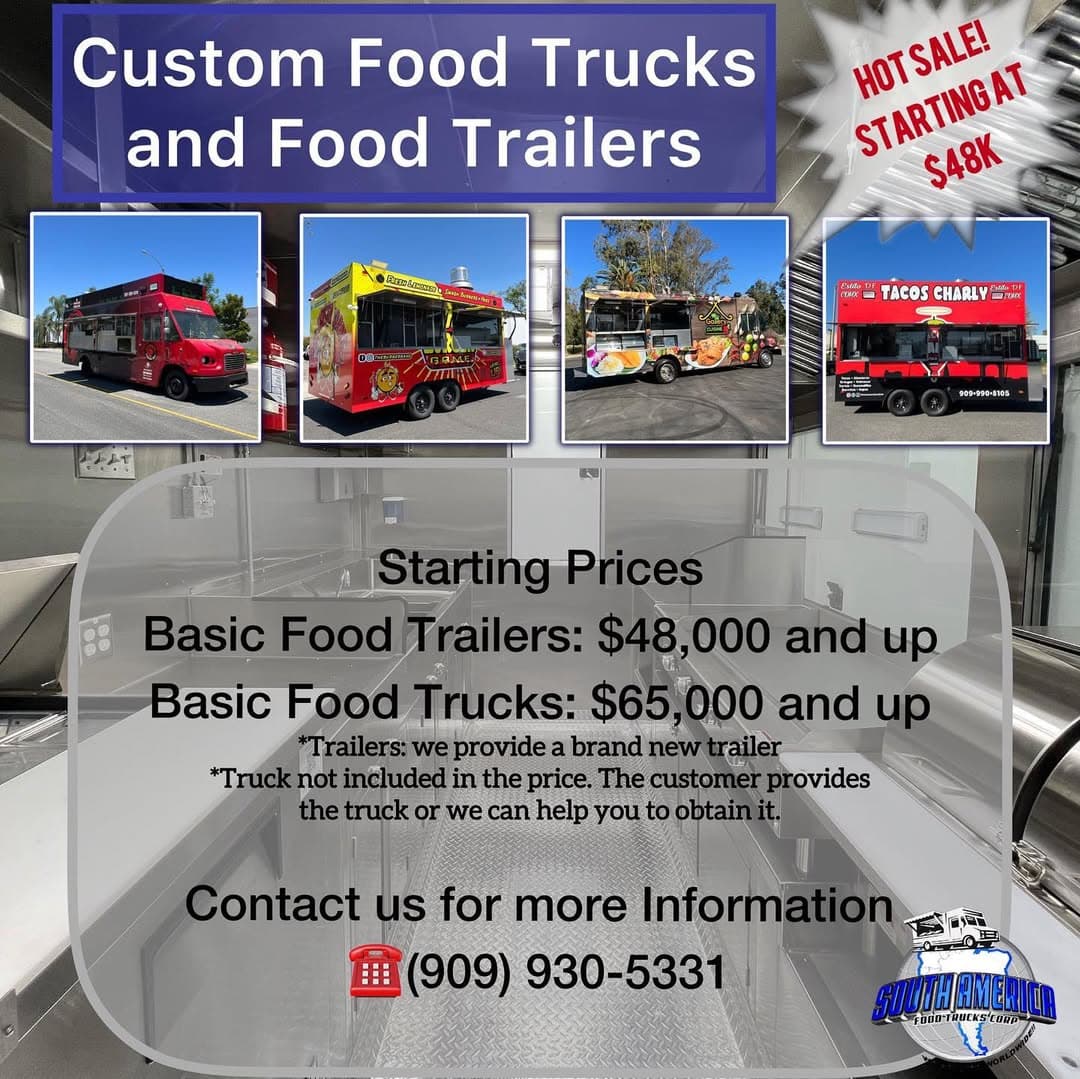
Before you spend a dollar on a build, you have to answer one foundational question: which format fits your business? Food trucks, concession trailers, and push carts each have real strengths and trade-offs. Here's how to choose.
The quick comparison
- Push cart: lowest cost, smallest footprint, fastest to launch. Best for focused menus and high foot traffic.
- Concession trailer: most kitchen space per dollar, detachable, lower entry cost than a truck.
- Food truck: maximum mobility and presence, drive-anywhere convenience, highest cost.
Push carts: the affordable entry point
If you're testing a concept or running a focused menu (coffee, churros, hot dogs, shaved ice), a push cart is the smartest way to start. They're compact, easy to maneuver, quick to permit, and dramatically cheaper than a truck. The trade-off is space and output: a cart limits how much you can cook and store at once.
Choose a cart if: you want the lowest-risk start, your menu is simple, and you'll work events and high-traffic pedestrian spots.
Concession trailers: space without the premium
A towable concession trailer gives you more square footage than a truck of similar cost, because you're not paying for an engine and drivetrain. Detach your tow vehicle and use it elsewhere while the trailer stays parked at your spot. The trade-off is mobility. You need a capable tow vehicle, and setup takes a little longer than simply parking a truck.
Choose a trailer if: you want a roomy kitchen on a tighter budget, you'll set up at semi-regular locations, and you already have (or can get) a tow vehicle.
Food trucks: maximum mobility and presence
A food truck is a self-contained, drive-anywhere commercial kitchen. Pull up, pop the window, and serve: no separate tow vehicle, no setup gymnastics. Trucks also command attention: a well-wrapped truck is a rolling advertisement. The trade-off is cost and complexity. You're maintaining a vehicle as well as a kitchen.
Choose a truck if: you'll move between many locations, you want maximum street presence, and your volume justifies the investment.
Don't forget Sprinters, Airstreams, and containers
The three classics aren't your only options. Sprinter van conversions offer a sleek, premium look with great fuel economy. Airstream conversions are unforgettable showpieces for premium brands and events. And shipping-container kitchens are perfect for semi-permanent locations like breweries and lots. The right answer is the one that matches how and where you'll actually operate.
Questions to ask yourself
- How many locations will I work, and how often will I move?
- What's my realistic launch budget?
- How complex is my menu, and how much output do I need?
- Do I already have a tow vehicle?
- What can my local health department and parking rules accommodate?
Still not sure? Let's talk it through.
There's no universally "best" format, only the best fit for your concept, budget, and goals. We've built all of them, and we're happy to help you weigh the trade-offs honestly. Tell us about your idea or explore everything we build on the What We Build page.